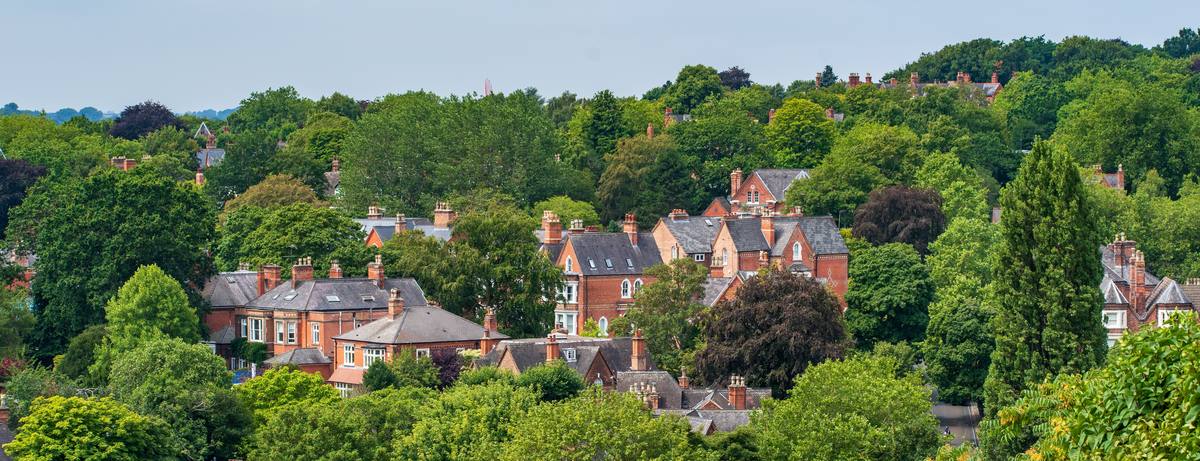
What is a conservation area?
A conservation area is a place a council has designated for its special architectural or historic interest. If your home is in one, some permitted development rights are reduced, work on trees and some demolition are controlled, and the council looks closely at design when you apply for planning permission.
What is a conservation area?
Councils designate conservation areas under section 69 of the Planning (Listed Buildings and Conservation Areas) Act 1990, to protect the character of an area as a whole rather than individual buildings. There are thousands across England, from city centres and Victorian suburbs to villages. Many councils publish an appraisal for each one, describing what makes it special.
What changes for home improvements?
Conservation areas are "article 2(3) land" under the General Permitted Development Order, which removes the rights most likely to change how a street looks:
- Side extensions aren't permitted development. Side extensions in a conservation area.
- Rear extensions are still allowed within the standard limits, but not two-storey extensions or the larger 6m and 8m scheme. Rear extensions in a conservation area.
- Loft dormers and other roof extensions aren't permitted development. Loft dormers in a conservation area.
- Cladding the outside of the house in stone, artificial stone, pebble dash, render, timber, plastic or tiles needs planning permission.
- Garden rooms and outbuildings can't go beside the house. Garden rooms in a conservation area.
- Solar panels can still go on the roof, but not on a wall facing a road. Solar panels in a conservation area.
Many councils also add Article 4 directions to their conservation areas, removing further rights such as replacing windows and doors, changing roofs, building porches or altering front walls. Read about Article 4 directions.
Are trees protected in a conservation area?
Yes. Most trees in a conservation area are protected even without a tree preservation order. You must give the council six weeks' notice before cutting down or pruning a tree with a trunk more than 7.5cm across, measured 1.5m above the ground. That matters if an extension's foundations would be close to a tree.
Do I need permission to demolish something?
Taking down a building, or some walls, fences and gates, in a conservation area can count as "relevant demolition", which needs planning permission. Whether it does depends on the size and position of what you're removing, so check with the council before you demolish anything, even if you plan to rebuild it.
How do I find out if my home is in a conservation area?
- Find your council on our council pages, which list its published conservation areas.
- Use our checker, which looks for conservation areas at your exact location.
- Check the council's own conservation area maps, or ask its planning team. Not every council has published its boundaries as open data yet.
The local authority search when you buy a house should also say whether it's in a conservation area.
Guides by project
- Do I need planning permission for a rear extension?
- Do I need planning permission for a side extension?
- Do I need planning permission for a loft dormer?
- Do I need planning permission for a garden room?
- Do I need planning permission for a porch?
- Do I need planning permission for a front wall or fence?
- Do I need planning permission for solar panels?